
An e-bike spec sheet can look precise while still leaving the most important question unanswered: how will the bike actually fit your ride? A higher number is not automatically a better bike. Motor power, torque, battery capacity, controller tuning, gearing, tire size, weight, brakes, and frame design work as a system.
Botny S51 Review: Street Test, Night Ride and Real-World Notes

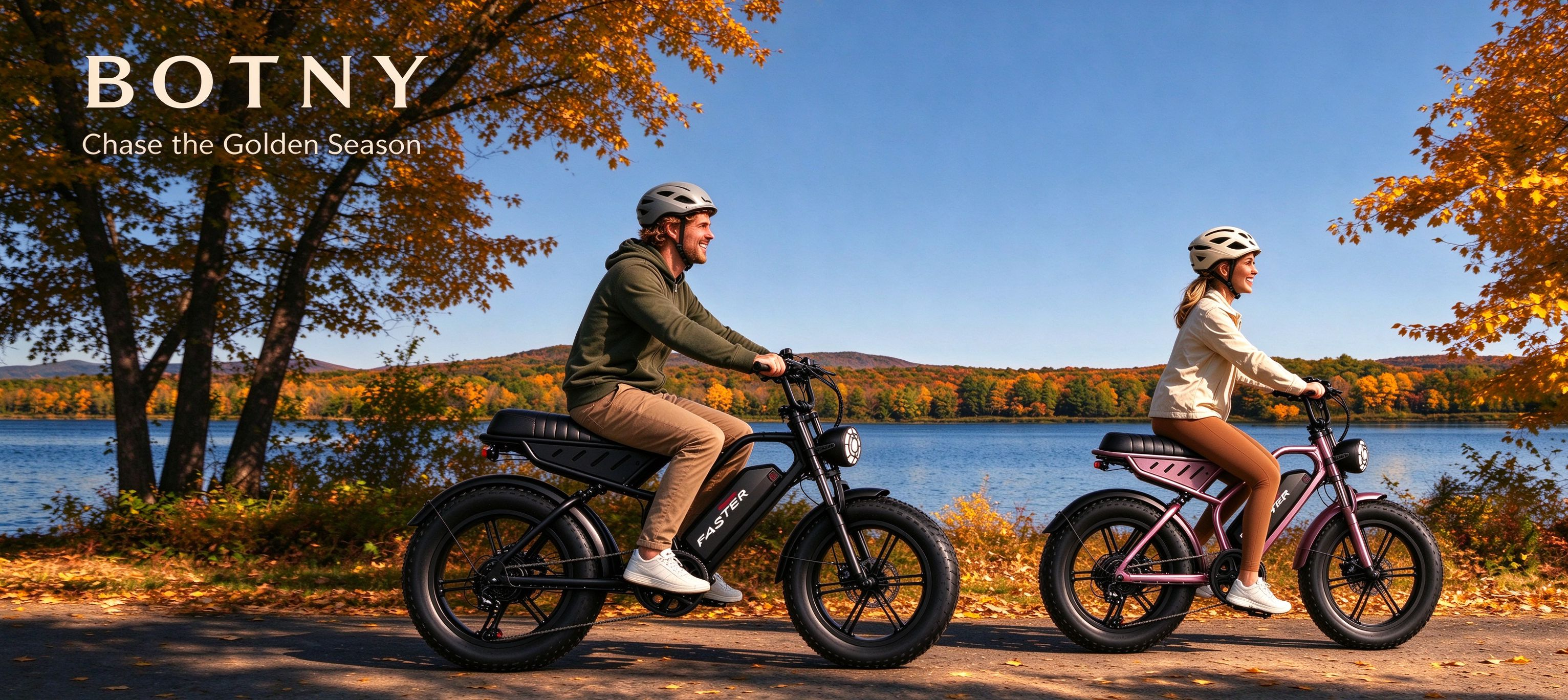
Some e-bikes are designed around a spec sheet. The Botny S51 is designed around a route you already know by heart: four blocks to the store, the bridge with the long shallow climb, the empty road at nine in the evening when the streetlights come on one by one.
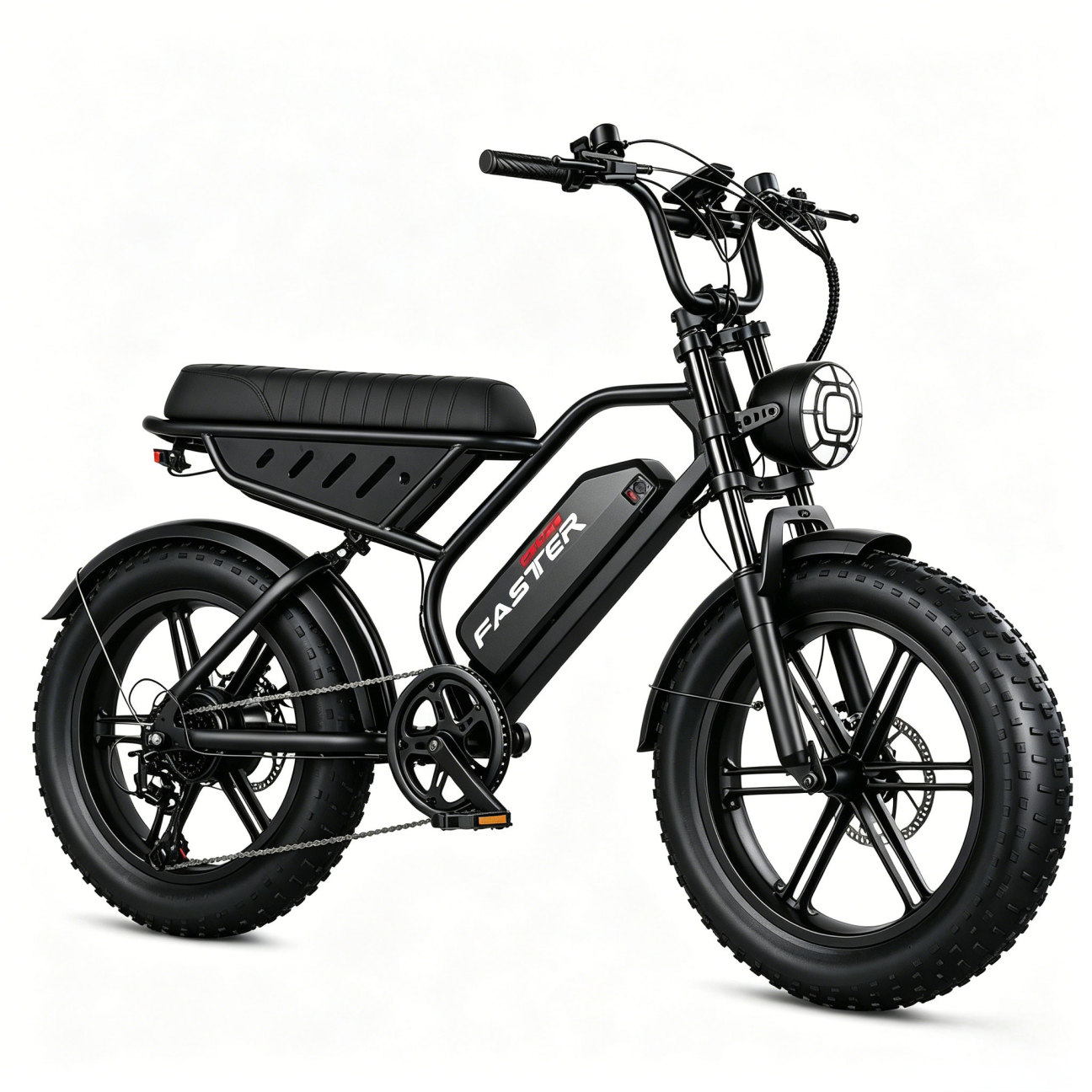
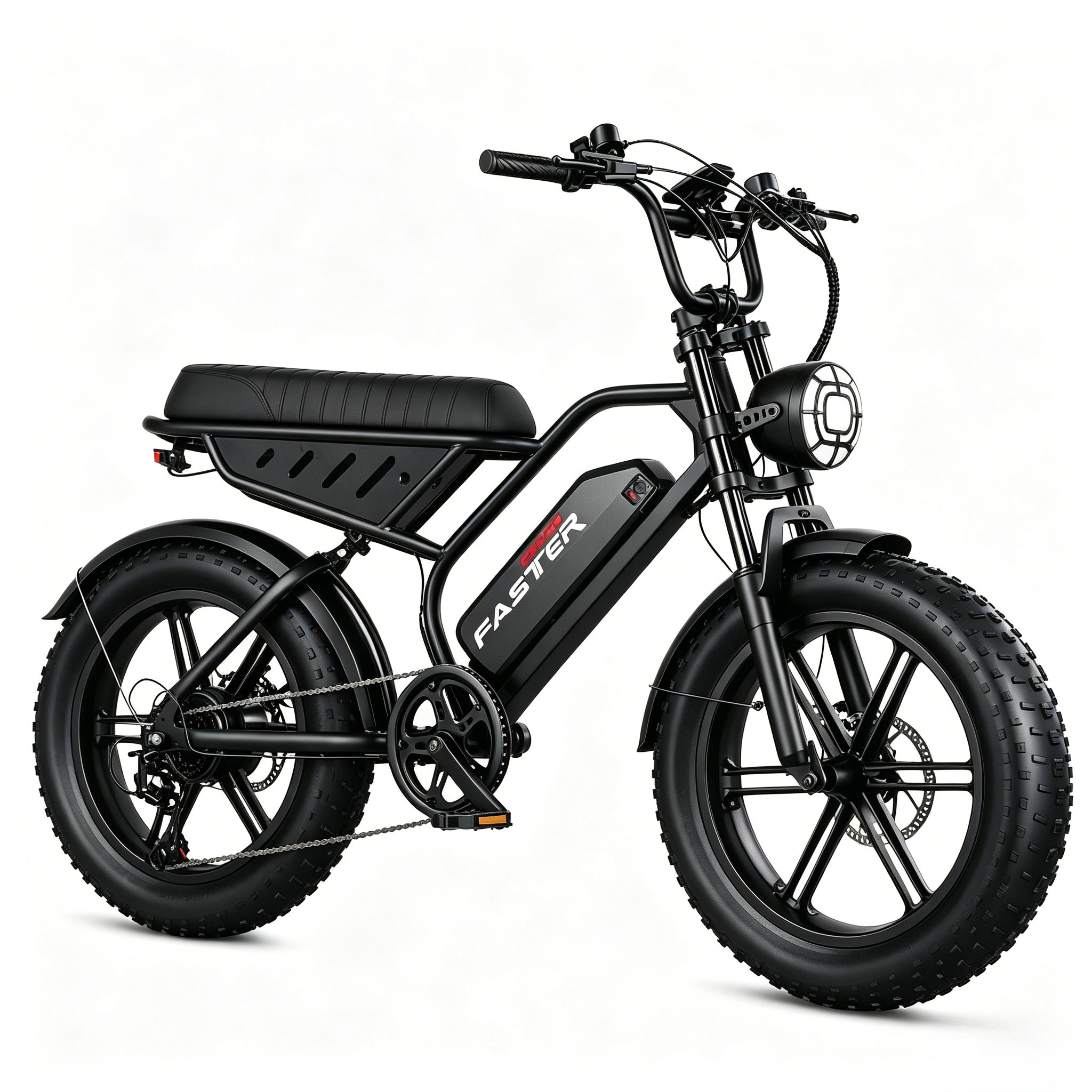
The S51 is a moped-style electric bike with a 1500W peak hub motor, 20 × 4-inch fat tires, full suspension and a long padded bench seat. On paper that is a familiar combination. The interesting part is how the bike behaves once you stop reading the numbers and start riding it.
We rode it on paved streets, shared bike paths and short gravel cut-throughs, in daylight and after dark. Below is what stood out, where the design makes trade-offs, and who this bike actually fits.
Quick take: the S51 is at its best as a comfortable, confident street cruiser with real presence in traffic. The 1500W peak motor pulls hard from a stop, the wide tires and full suspension shrink rough pavement, and the bench seat is genuinely usable. It is not a trail bike, and the brakes are mechanical rather than hydraulic — both are things to know before you buy, not reasons to avoid it.
1. Meet the Botny S51
The first thing people notice is the shape. The S51 uses a step-through moped frame with a long bench seat, wide bars and a tucked-in rear wheel. It reads as a small motorcycle rather than a bicycle, and that matters more than it sounds: drivers treat you differently when the silhouette is familiar to them.
The second thing they notice is the size of the tires. Twenty-inch wheels with four-inch knobby rubber give the bike a planted stance and a lot of visual weight for something you can still pedal.
Underneath the styling, the S51 is built around a practical brief: get one person across a city comfortably, in most weather, without needing a parking space or a charging station at the other end. Everything below should be read against that brief rather than against a mountain bike or a road bike.
2. Specs at a Glance
These are the manufacturer's published figures. Real-world results vary with rider weight, terrain, temperature, tire pressure and how much you use the throttle.
| Motor | 1500W peak rear hub motor |
|---|---|
| Top speed | Up to 28 MPH |
| Tires | 20″ × 4″ knobby fat tires |
| Suspension | Full suspension — front fork and rear shock |
| Brakes | Dual mechanical disc brakes, front and rear |
| Battery | Removable lithium-ion pack, charges on or off the bike |
| Frame | Step-through moped style, upright riding position |
| Load capacity | Up to 330 lb |
| Seat | Extended padded bench |
| Climbing (claimed) | Up to 30° slopes |
| Assembly | 85% pre-assembled |
| Warranty | 180 days |
Peak and continuous motor ratings are not the same thing. A 1500W peak figure describes a short burst, not sustained output. Where local law defines e-bike classes by motor wattage, check how your jurisdiction measures it — see section 7.
3. Street Test: Brakes, Handling, Comfort
1Braking: mechanical discs, and what that means
The S51 runs mechanical disc brakes on both wheels — cable-actuated rather than hydraulic. That is a deliberate cost and maintenance decision, and it comes with honest trade-offs in both directions.
The upside is predictability and serviceability. There is no fluid to bleed, no sealed system to fail, and a cable that needs adjustment can be tightened at home or by any bike shop. If you have ever owned a hydraulic brake that went soft after a winter in a cold garage, you know why this is worth something.
The trade-off is feel. Hydraulic brakes offer finer modulation and lighter lever effort; mechanical brakes ask for a firmer squeeze and communicate a little less. For commuting at 15–20 MPH on pavement they are entirely adequate, and wet-weather performance is still far better than any rim brake. Expect to check cable tension once in the first few hundred miles as the pads bed in.
2Handling: compact, upright and easy to place
A short wheelbase and wide handlebars make the S51 feel smaller than it looks. It turns in quickly at low speed, which is exactly what you want in bike lanes, driveways and crowded parking lots.
At speed the bike feels stable rather than nervous, largely thanks to the tire volume. Four-inch rubber puts a generous contact patch on the road, and it forgives potholes, tram rails and the spray of gravel at the edge of a shoulder. The cost is steering weight: this is not a bike you flick through tight singletrack, and the front end carries more rotational mass than a narrow-tire commuter.
The upright position is the other half of the handling story. You sit high enough to see over parked cars, and the wide bars give you leverage without straining your wrists. If you are coming from a road bike it will feel upright to the point of being odd for the first ten minutes, then comfortable for the next two hours.
3Comfort: suspension, seat and the variables that matter
Full suspension on a moped-style frame does two jobs. The front fork absorbs the sharp stuff — cracks, curb ramps, patch repairs. The rear shock keeps the back end from kicking when you cross a joint in the pavement at speed.
How much comfort you actually get depends heavily on rider weight and tire pressure. A lighter rider on hard tires will feel a firm, almost rigid ride; the same bike with 5–8 PSI less in each tire and a heavier rider on board feels noticeably plusher. Tire pressure is the cheapest suspension adjustment you own, and it is the first thing to try before deciding the setup is wrong for you.
The bench seat is long, flat and padded — long enough to shift position on a longer ride instead of sitting in one spot. Riders with large feet should check clearance around the rear footrests; folding them away when no passenger is aboard gives your heels more room.
With a 330 lb load rating, the S51 is built for adult riders and gear without feeling overloaded. That figure is total weight on the bike, rider plus cargo, so plan accordingly if you regularly carry groceries or a backpack full of tools.
4. Power and Hills
A 1500W peak hub motor gives the S51 strong, immediate pull from a standstill. Rolling away from a light, you are across the intersection before traffic behind you has finished reacting. That low-end response is the single most useful thing about the bike in city riding, because it is what lets you merge, change lanes and clear junctions without hesitation.
Twenty-eight miles per hour is a ceiling, not a cruising speed. The bike feels most natural between roughly 15 and 22 MPH, where the motor is barely working, wind noise is manageable and you still have margin to react. Holding the top of the range for long stretches drains the battery quickly and leaves you with less headroom for the unexpected.
Climbing is where the honest conversation starts. Botny rates the S51 for slopes up to 30°, and on short, well-surfaced inclines it delivers. Long climbs are a different problem: sustained grades, low battery, a headwind and a heavier rider all stack against you, and speed will drop. If your daily route includes a mile of continuous climb, ride it before you buy, or accept that you will be helping with the pedals.
Throttle and pedal assist behave differently, and it is worth learning both. Pedal assist feels smoother and extends range because it ramps with your effort. The throttle is for the moments you need power now — pulling away from a stop on a hill, or getting out of a blind spot quickly. Using the throttle as your default is the fastest way to watch the battery gauge fall.
5. The Night Ride Test
Most e-bike reviews are written in daylight. Most commuting happens in the dark for a good part of the year, so the evening ride deserves its own section.
The principle that matters after sunset is not seeing — it is being seen. A rider who can see 40 feet ahead but is invisible to a driver pulling out of a side street is in more danger than a rider with a modest light who is unmistakable in a mirror. Judge any night setup by that standard first.
1Aim the headlight, do not just switch it on
A headlight pointed too high throws light into the trees and blinds oncoming traffic; pointed too low it lights ten feet of asphalt and nothing else. On a flat road, the beam should reach far enough that you can stop within the distance you can see at your normal cruising speed — and at 20 MPH that distance is longer than most people guess.
Check the aim with the bike loaded as you normally ride it. A bike that sits level when empty squats at the rear once a rider is aboard, which lifts the beam.
2The back of the bike matters more than the front
Rear visibility is the part riders neglect. A taillight plus reflectors on the rear rack, pedals or your clothing gives a following driver three separate chances to notice you. Add reflective material at ankle height — the up-and-down motion of a pedaling leg is far more conspicuous in peripheral vision than a static light.
3Signal before you move
Hand signals still work, and on a bike without turn indicators they are the only way to tell a driver what you are about to do. Signal early, signal clearly, and make eye contact at junctions where you can. Bright clothing in a contrasting color does more for your odds than any accessory bolted to the frame.
Light and reflector specifications vary by model and by market. Check what your S51 ships with, and check your local rules for night riding — many jurisdictions require a front light, a rear reflector and side reflectors after dark.
6. Battery, Range and Charging
The S51 uses a removable lithium-ion pack, which sounds like a small feature and turns out to be one of the most practical things about the bike. You can charge it in the bike, or lift it out and charge it at a desk, in a garage, or in an apartment where running an extension cord to the street is not an option. In winter, a battery that lives indoors stays warmer, and a warm battery holds voltage better than a cold one.
Range is the number everyone asks about and the number least worth quoting as a single figure. Six things move it, and five of them are under your control:
- Rider and cargo weight — more mass means more energy per mile, especially uphill
- Assist level and throttle use — full assist and throttle-only riding cut range the most
- Tire pressure — soft four-inch tires are comfortable and slow
- Terrain — a flat commute and a hilly one are different bikes in practice
- Temperature — cold packs deliver noticeably less usable capacity
- Stop-and-go — repeated hard acceleration costs more than steady cruising
The practical method is to plan by time rather than by miles. Ride your normal route once at your normal assist level and note how long it takes and how much charge it uses. That tells you more about your real range than any published figure, because it is measured on your streets, at your weight, in your weather.
For battery health, avoid leaving the pack fully drained for long periods, avoid storing it at full charge in summer heat, and let a hot pack cool before plugging it in. Charging to somewhere around 80–90% for daily use and saving a full charge for long rides is a habit that costs nothing and pays back over years.
7. Is the S51 Street Legal?
This section matters more than any performance figure on the page, so it gets a direct answer: it depends entirely on where you ride, and you need to check before you buy.
In the United States, the common three-class e-bike framework caps Class 2 at 20 MPH with a throttle, and many states define the class partly by motor output — frequently a 750W limit. A bike rated at 1500W peak sits outside that description in a number of jurisdictions, even though peak and continuous ratings are not the same measurement.
What that means in practice:
- Check your state's e-bike statute for motor wattage, speed and throttle rules, not just the class label on a product page
- Check local rules for bike paths, greenways and trails — many exclude throttle bikes or anything above a set power
- Check helmet, lighting and age requirements, which often differ from bicycle rules
- If your area restricts higher-power bikes, ask about registration and licensing rather than assuming a bicycle exemption applies
None of this is unique to Botny. Almost every moped-style e-bike in this power range raises the same question, and the responsible answer is the same: verify locally, ride within the rules where you live, and do not assume that because a bike is sold online it is legal on every path in your city.
8. Who Should Choose the S51?
After enough miles, the bike's natural habitat becomes clear. It is a street machine with off-road manners, not the other way around.
The S51 is a strong fit if you:
- Commute or run errands on paved roads and want to arrive without sweating
- Like the moped silhouette and want something that reads clearly in traffic
- Deal with rough pavement, patched asphalt or short gravel sections
- Want suspension and fat tires without buying a mountain bike
- Need a bike that carries a heavier rider or a load of groceries comfortably
- Prefer brakes you can adjust yourself over a sealed hydraulic system
- Want a removable battery you can charge indoors
Look elsewhere if you:
- Climb long or steep grades daily — sustained climbing is not this bike's strength
- Want to ride technical trails, jumps or loose sand for hours
- Need hydraulic brake feel or a finely tuned suspension response
- Ride in a jurisdiction where 1500W peak is not permitted on the paths you use
- Want a light bike you can carry up a flight of stairs every day
Available Now
Botny S51 Moped-Style E-Bike
1500W peak hub motor, 28 MPH top speed, 20″ × 4″ fat tires, full suspension and a 330 lb load rating. Built for the street you actually ride.
Shop the S519. Final Verdict
The S51 is not trying to win a spec-sheet argument. It is trying to be the bike you reach for when the car keys are more trouble than they are worth — and on that measure it makes a convincing case.
What it does well, it does with confidence: strong low-end pull, stable and forgiving handling on bad pavement, a genuinely comfortable seat, suspension that earns its place on city streets, and a removable battery that fits real apartments and real winters. The moped styling is not decoration either; it changes how you are perceived on the road, and that is a safety feature in its own right.
The honest limitations are equally clear. Mechanical brakes ask more of your hand than hydraulic ones. Sustained climbing is a weak point. The bike is heavy, and it is not a trail machine despite the knobby tires. And in some jurisdictions, 1500W peak means you need to do your homework before you ride it on a bike path.
None of those are dealbreakers for the rider this bike was built for: someone covering a few miles of city a day, in most weather, who wants comfort and presence over peak performance. If that describes your week, the S51 deserves a closer look — and a test ride on your own streets, at your own weight, before you decide.
10. Frequently Asked Questions
How fast does the Botny S51 go?
Botny rates the S51 at up to 28 MPH. That is a maximum, not a comfortable cruising speed; most riders will settle between roughly 15 and 22 MPH, where the bike is quieter, more efficient and easier to control.
How far can the S51 travel on one charge?
Range depends on rider weight, assist level, throttle use, terrain, tire pressure and temperature, so a single number is misleading. The reliable approach is to ride your own route once and note the time and charge used. Published range figures assume favorable conditions that most commutes do not match.
Is a 1500W e-bike legal where I live?
Possibly, but you must check. Many US states cap the common e-bike classes at 750W of motor output, and peak versus continuous ratings are measured differently. Check your state statute for wattage, speed and throttle rules, and check local path and trail regulations separately.
Are mechanical disc brakes a problem?
No, they are a trade-off. Mechanical discs are easy to adjust, need no fluid, and stop well in wet weather. They offer less modulation and require a firmer lever pull than hydraulic brakes, and cables need occasional tension adjustment as pads bed in.
Can the S51 carry a passenger?
The bench seat is long and the bike is rated to 330 lb total load, but that rating covers rider plus cargo, not two adults automatically. Carrying a passenger also changes braking distance and handling, and some jurisdictions prohibit it outright. Check your local rules first.
Is the S51 good for hills?
For short inclines and rolling streets, yes — the motor has strong low-end torque and Botny rates the bike for slopes up to 30°. Long sustained climbs are where it struggles, especially with a heavier rider, a low battery or a headwind. Test your actual route if climbing is a large part of your day.
How much assembly is required?
The S51 arrives 85% pre-assembled. Expect to fit the front wheel or handlebar depending on packaging, attach pedals, and check tire pressure, brake tension and fastener torque before the first ride. A quick safety check by a bike shop is cheap insurance.